
Westminster, MD
Westminster Garage Door Guide
What Your Garage Door Is Trying to Tell You
Westminster homes built 1938-2006 carry original hardware that speaks up in cold weather. Here's what each noise means and when it's actually urgent.
- Licensed & Insured
- Same-Area Service Calls
- Upfront Pricing
The Problem
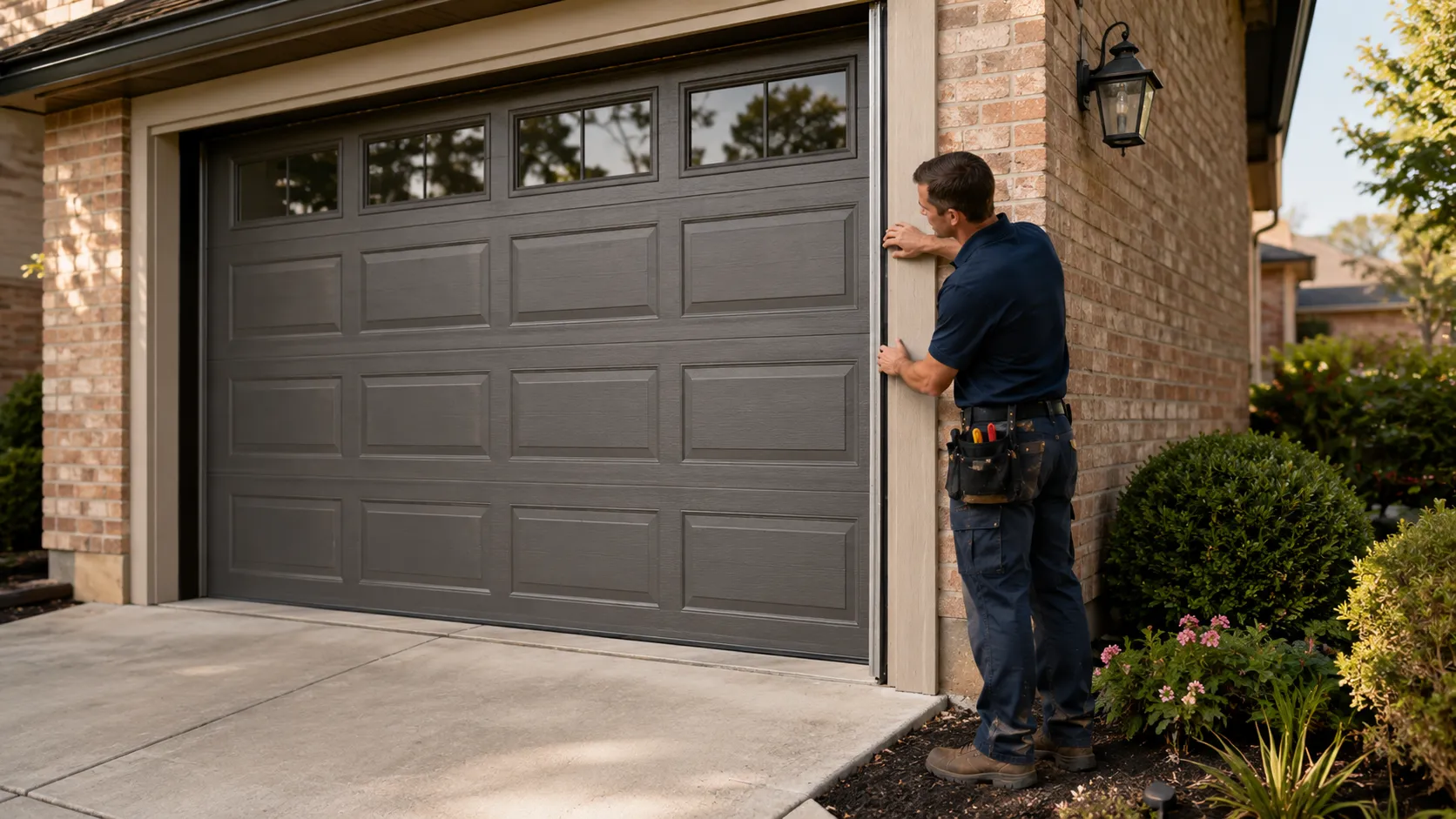
Most of the houses in this area went up between 1938 and 2006, with the median around 1991, so the noise your door makes often traces straight back to the hardware installed when the house was built. A squeal isn't just annoying - it's a bearing or a hinge that's dry, and on a door this old that hinge has probably never been lubricated once. A hard bang on the way down usually means a cable has gone slack or a roller has jumped the track, and on original torsion setups from the 80s and 90s that's a spring under a lot of stored energy, not a minor fix.
A grinding sound is almost always a roller, worn from age rather than abuse. None of these noises are random. Each one points at a specific part, and the part that's failing is usually the one nobody's touched since the house was built.
Ignore the sound long enough and the part fails the rest of the way, usually while the door is halfway open.
What the Weather Here Does to It
In this climate band, classified cold and severe, steel torsion springs contract in low temperatures and lose tension faster than they would somewhere milder. That change in tension shows up as sound before it shows up as failure - a spring that was quiet in September starts creaking in December because the coil geometry has shifted slightly with the cold. Lubricant on rollers and hinges thickens too, so a roller that rolled smoothly in summer starts to chatter against the track once temperatures drop.
Steel tracks themselves contract a fraction of an inch in hard cold, which is enough to turn a roller that was borderline into one that's now catching on every pass. None of this means the door is broken. It means cold is exposing wear that was already there.
The noise is the door telling you the tolerance it's been running on all year just got smaller.
The Common Mistake
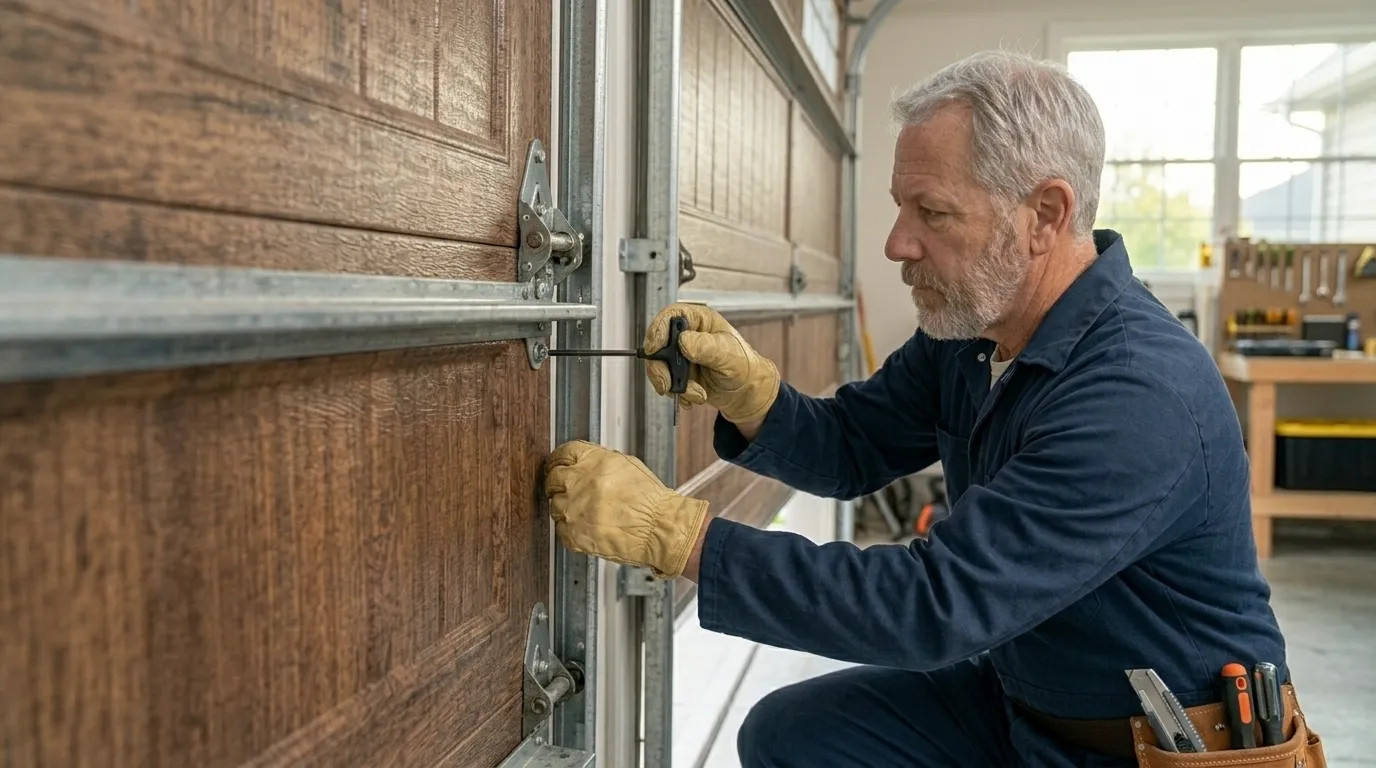
Because so much of the local stock dates to the 1980s and 90s, the common mistake here is treating a slow grinding roller as cosmetic instead of a sign the original rollers are past their 20-plus year service life. Homeowners spray something on the noisy spot, the sound quiets down for a week, and the underlying part keeps wearing.
The other version of this mistake is calling a squeal a spring problem when it's a hinge, or calling a bang a cable problem when it's a bent track - guessing at the fix without knowing which part is actually failing. On a door old enough to be original to a 1990s build, more than one part is usually near the end of its life at the same time, so a fix aimed at the wrong part buys you very little time before the next noise starts.
What Changes With the Season
With roughly 9,478 owner-occupied houses across the service area built mostly in that same 1980s-90s window, cold snaps tend to reveal the same worn bearing points across a lot of driveways at once - it's not your imagination that everyone's door seems to act up the same week. Across the roughly 19,587 households we cover, from New Windsor six miles out to New Market nineteen miles away, the same cold-snap timing shows up every year.
Spring and fall, when temperatures swing most, are when a marginal roller or a tired spring is most likely to finally let go. One honest limitation: we can't tell you over the phone whether a noise is a five-minute lubrication fix or a spring that's about to break - that call needs someone looking at the actual hardware, because the same sound can mean two very different repairs depending on what's worn.
How We Can Help
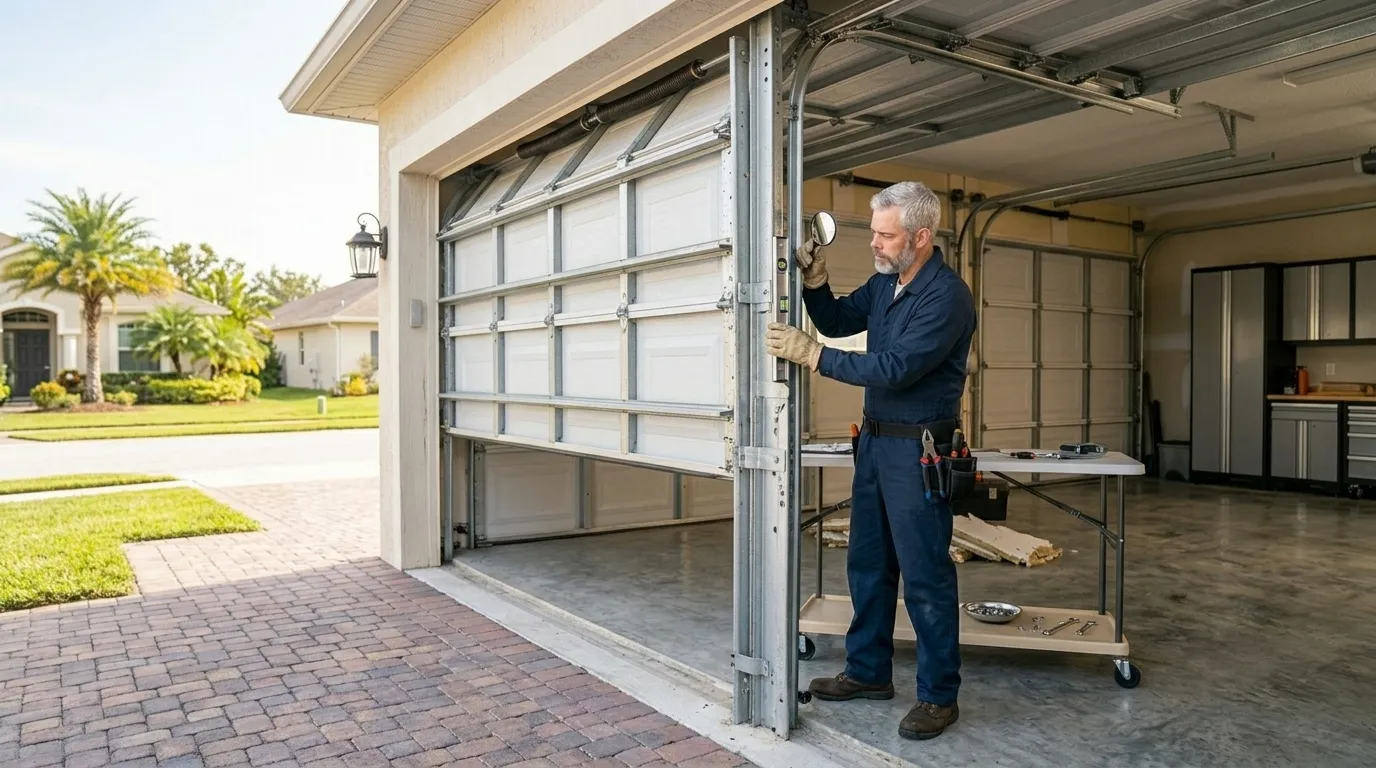
Garage Door Opener Repair
Openers that hum, stall, or reverse - diagnosed and fixed, from worn gears to logic boards.
Learn more →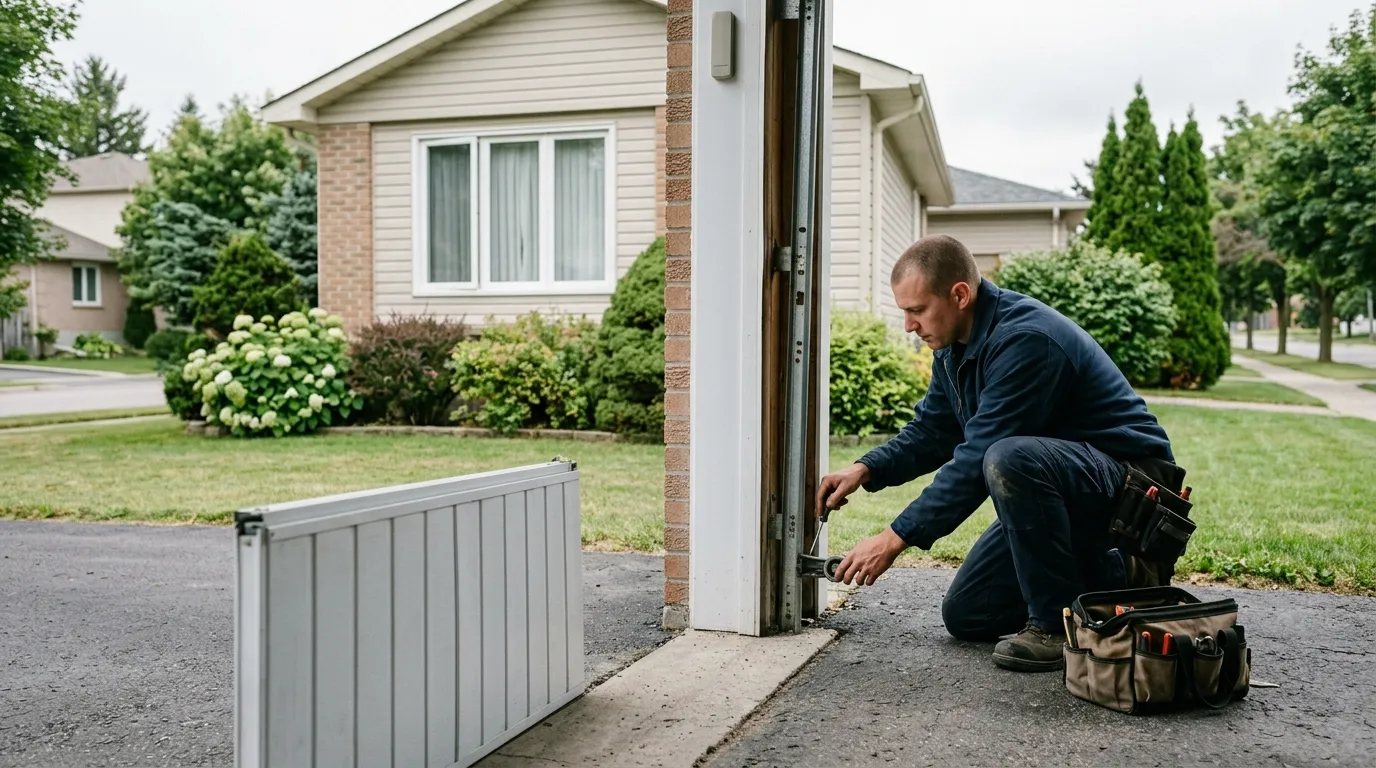
Garage Door Roller Replacement
Worn, noisy rollers swapped for smooth nylon ones so the door runs quiet.
Learn more →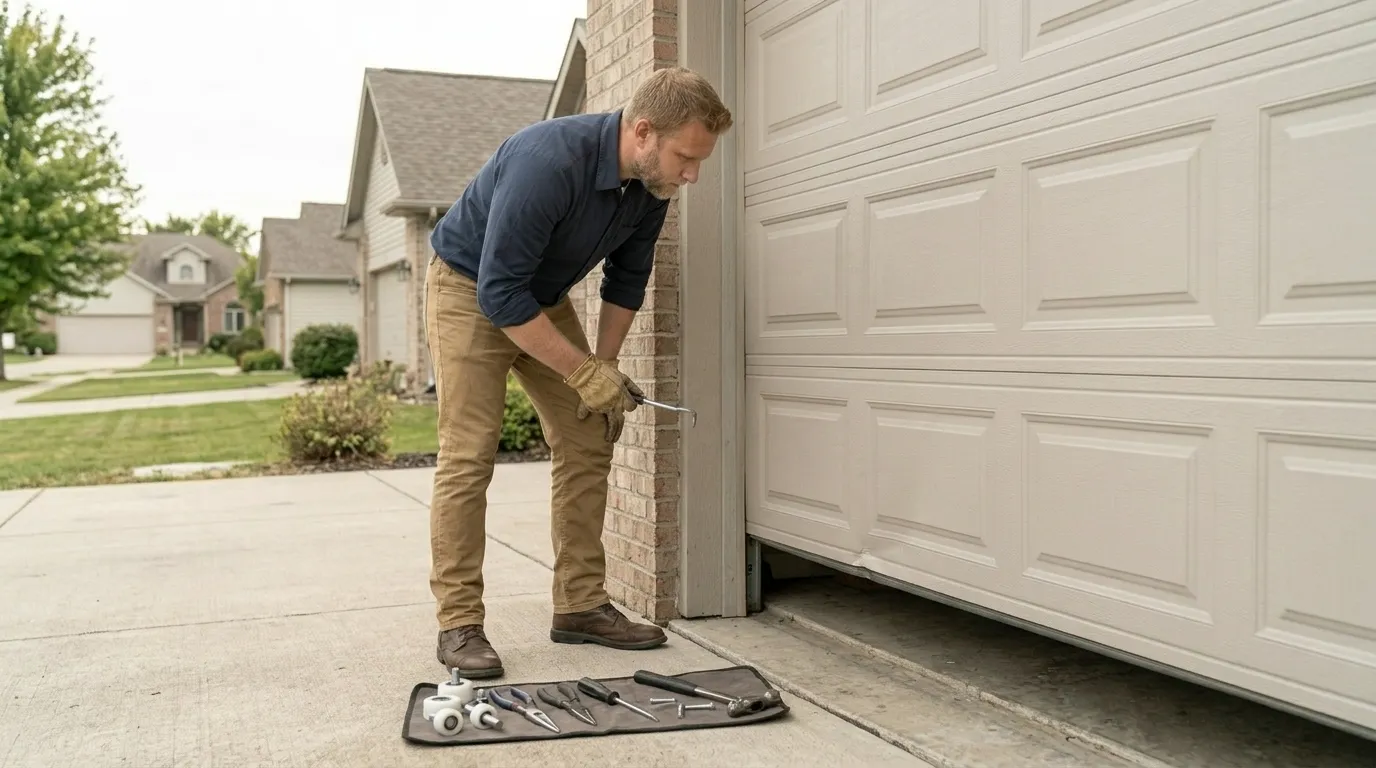
Garage Door Installation
New sectional doors sized and installed for the housing stock actually built in this area.
Learn more →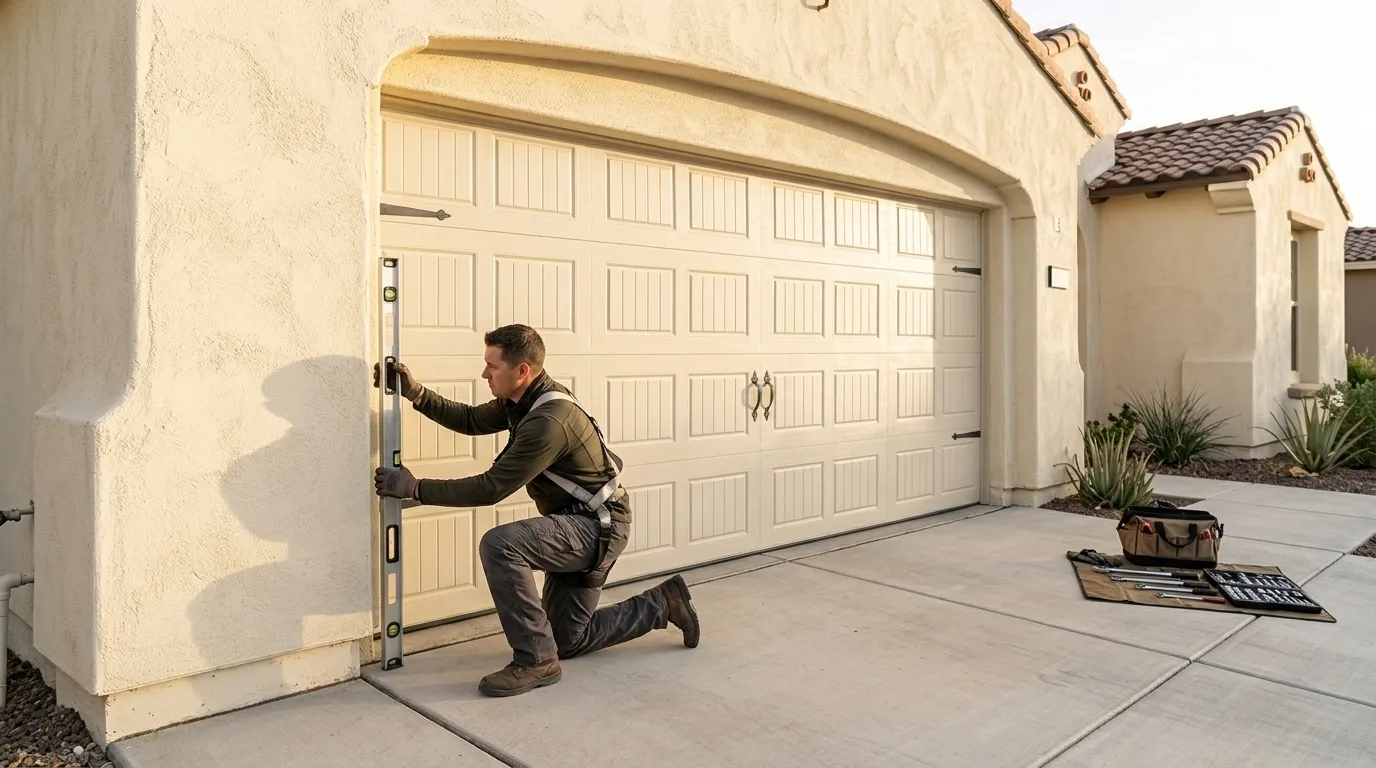
Garage Door Panel Replacement
Dented or cracked panels swapped without replacing the whole door where the frame is sound.
Learn more →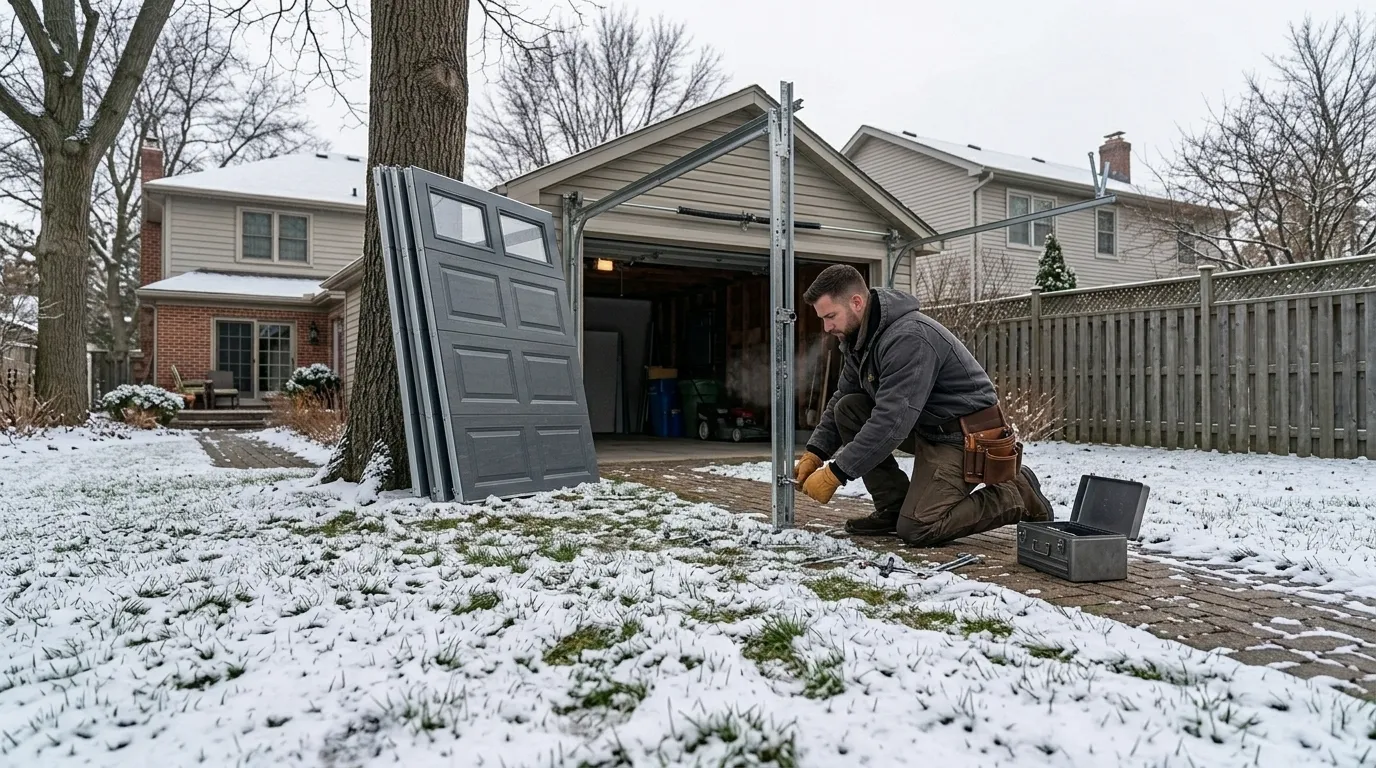
Garage Door Service
Tune-ups, lubrication, and safety checks that catch a small problem before it becomes a service call.
Learn more →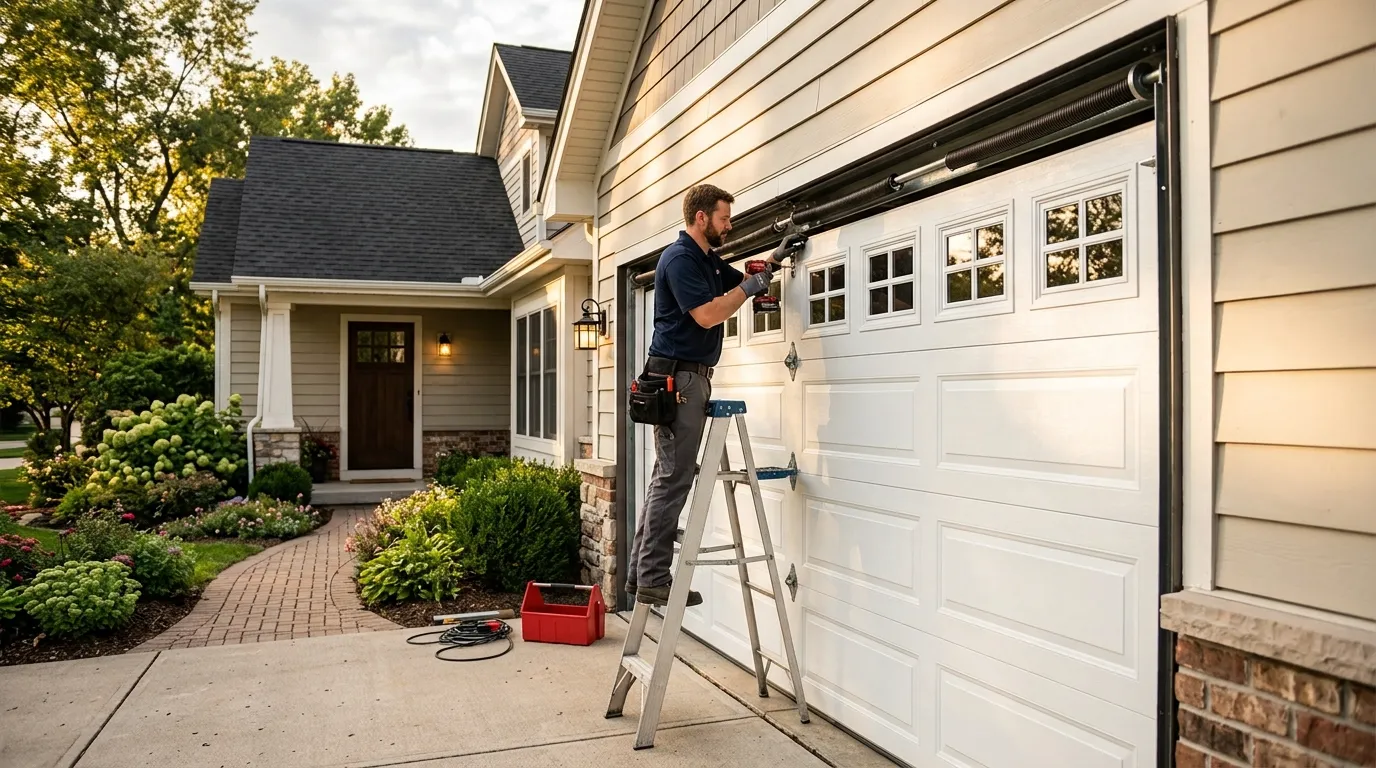
Garage Door Repair
Springs, cables, tracks, rollers, and openers fixed by a tech who explains the problem before touching anything.
Learn more →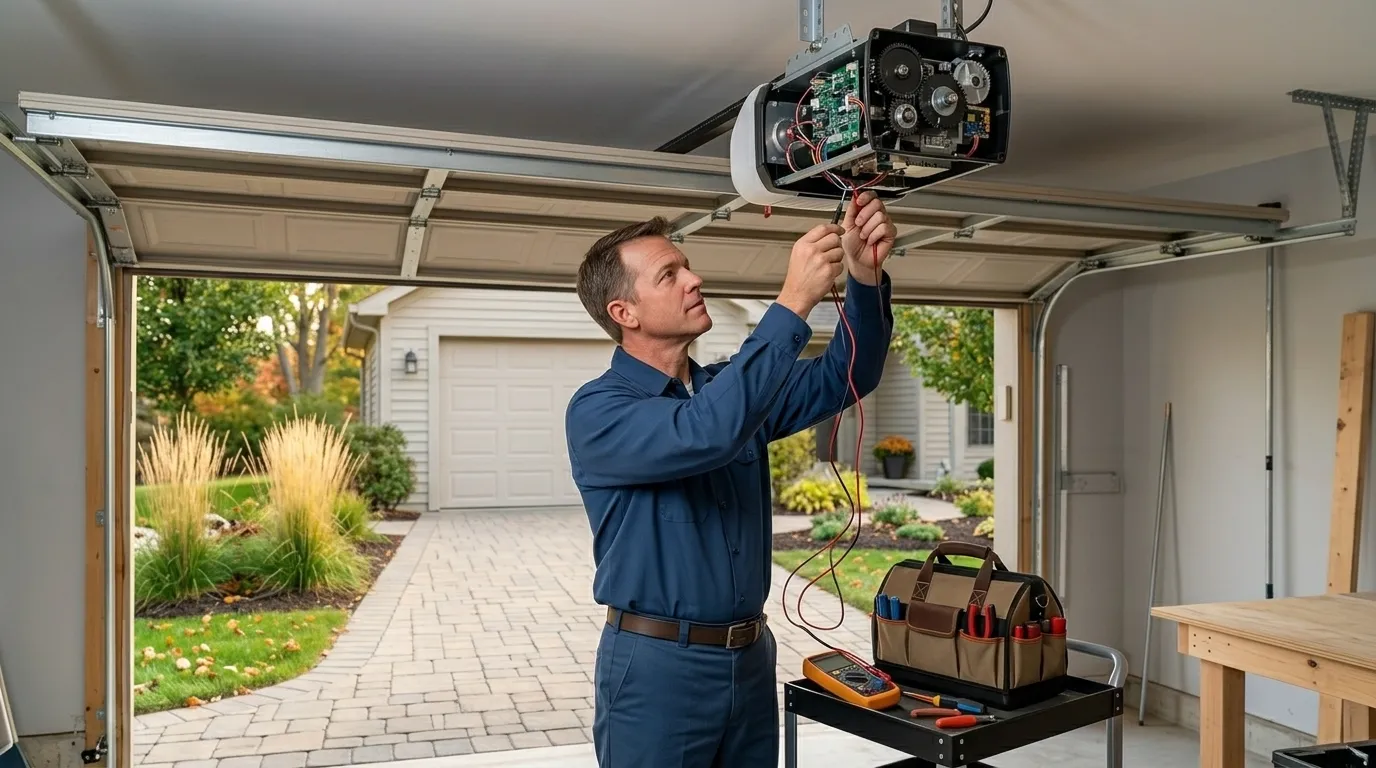
Garage Door Off Track
Doors that jumped the track reset safely, with rollers and alignment checked so it holds.
Learn more →
Garage Door Cable Repair
Frayed or snapped lift cables replaced and tensioned so the door lifts level and safe.
Learn more →Frequently Asked Questions
My door squeals every morning when it's cold but stops by afternoon. Is that normal?
That pattern is common on older hardware in this climate. Cold thickens lubricant and contracts steel slightly, so hinges and rollers bind more in the morning and loosen as things warm up. It's a sign the part needs service, not that it's failing outright, but it won't fix itself - the binding wears the part a little more each cold morning.
Is a grinding noise always the rollers?
Usually, especially on houses with hardware from the 1980s or 90s that hasn't been replaced. Rollers have a service life, and grinding is the sound of worn wheels rubbing against the track instead of rolling smoothly. It can also be a bent track, so the fix depends on which one is actually worn.
A bang or thud sound started this week - should I stop using the door?
A sudden bang, especially on the way down, often means a cable has slipped or a spring has shifted. Stop using the opener and operate it manually as little as possible until someone can look at it - a loaded spring or slack cable under tension is not something to keep cycling.
Why does everyone's door seem to act up the same cold week?
A lot of the houses across this area were built in the same general window, mostly the 1980s and 90s, so a lot of doors are carrying hardware of a similar age. When a hard cold snap hits, it tends to expose the same worn bearings and stiff springs across many houses at roughly the same time.
Have a Door That Needs a Second Opinion?
Call and describe what it is doing - we will tell you what it likely is.